Quick answer: To find a nursing home quickly, start with the hospital discharge planner’s list, compare those homes on Medicare Care Compare, then visit or call your top two or three. A CCRC is rarely a fast option, because moving in usually involves an application, a health screening and a long-term contract that deserves unhurried review.
The call usually comes without warning: the hospital says your parent will be ready to leave in a day or two and cannot safely go home. In more than 15 years in the business office of skilled nursing facilities, I met many families making this decision in a hallway, on a phone, with almost no time. Here is a short, calm plan, and where a continuing care retirement community (CCRC) fits when the clock is running.
How do you find a nursing home quickly?
You find a nursing home quickly by narrowing the choices fast and checking the few that are left carefully. Medicare.gov lays out four steps: research the nursing homes in your area, compare their quality, visit the ones you are considering, and then make your decision. When time is short you still do all four, in hours instead of weeks.
Two things save the most time. First, ask early: Medicare.gov suggests asking the hospital social worker about discharge planning as early as possible. Second, compare before you drive anywhere: Medicare Care Compare shows health inspection results, staffing and quality measures for each certified home, so you can cut a long list to two or three.
Not sure what the numbers and icons mean? Here is how to read Medicare Care Compare nursing home ratings in a few minutes.
Should you choose a nursing home or a CCRC when time is short?
When time is short, a nursing home is usually the realistic choice, and a CCRC is usually a decision for later. A nursing home, also called a skilled nursing facility, provides nursing care, 24-hour supervision and help with everyday activities, along with rehabilitation services, according to the National Institute on Aging.
A CCRC is a different kind of commitment. The Administration for Community Living describes it as a community, typically on one campus, that offers levels of service ranging from independent housing to nursing home care. It also notes that a CCRC may require a health screening before you can move into an independent living unit, and that fee arrangements vary from one community to the next. A CCRC is something people usually plan for while still fairly independent, not something they join from a hospital bed.
| Question | Nursing home | CCRC |
|---|---|---|
| What is it? | A facility that provides nursing care, 24-hour supervision and help with daily activities. | A campus with several levels of service, from independent housing to nursing home care. |
| Who is it designed for? | People who need nursing care or rehabilitation now. | People planning ahead, often while still living independently. |
| What does getting in involve? | A referral, a review of medical records and an open bed. | An application, a possible health screening and a long-term contract. |
| Where can you compare quality? | Medicare Care Compare, for Medicare- and Medicaid-certified homes. | Care Compare for the campus nursing home if it is certified; ask your state about the community as a whole. |
For a fuller side-by-side, see my guide to the difference between a CCRC, assisted living, and a nursing home.
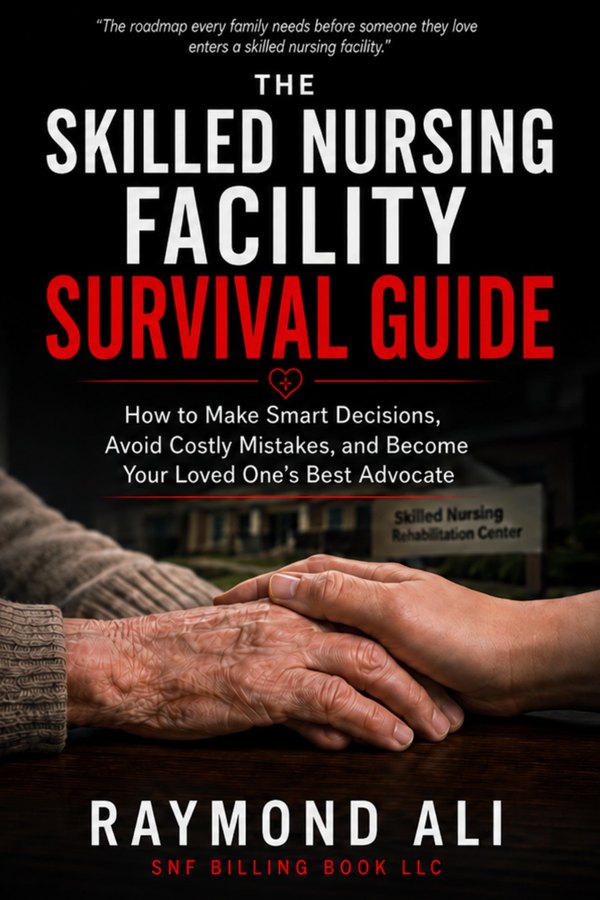
Making this decision under pressure? The Skilled Nursing Facility Survival Guide walks you through choosing a facility, what to ask before and after admission, and how to speak up for your loved one from the first day through discharge. Get it on Amazon or Barnes & Noble
Can a CCRC still help if you need care right away?
Sometimes, but only in a limited way. Some CCRC campuses may accept people from the wider community into their on-site nursing home, and others reserve those beds for their own residents. Policies differ, so the only way to know is to call and ask: “Do you admit people who are not CCRC residents to your nursing home, and do you have a bed open now?”
If the answer is yes, treat that nursing home like any other on your list. Being admitted to the nursing home on a CCRC campus is not the same as joining the CCRC. Joining is a separate decision with its own contract, and it is worth having an attorney review that contract when you are not rushed.
What should you ask the hospital discharge planner?
Ask the discharge planner for the list of facilities and for the quality information behind it, and tell them you want to be part of the plan. Federal hospital discharge planning rules call for a discharge plan to include a list of the skilled nursing facilities available to the patient that participate in Medicare. The hospital must also share data such as quality measures to help you choose, tell you that you are free to choose among participating providers, and identify any facility it refers you to in which it has a disclosable financial interest.
Useful questions:
- What kind of care will my parent need after leaving, and for roughly how long?
- Which facilities on the list can provide that care, and which have a bed open now?
- Can you show me the quality information for each one?
- Does the hospital have a financial interest in any of these facilities?
- What is the expected discharge date?
What is a 48-hour checklist to find a nursing home quickly?
A 48-hour checklist to find a nursing home quickly has three parts: gather names, compare, then visit and decide. Print this or save it to your phone.
First few hours
- Meet or call the hospital discharge planner or social worker and ask for the facility list.
- Write down what matters most: distance from family, type of care, language or food preferences.
- Need more names? Call the Eldercare Locator, a public service of the Administration for Community Living, at 1-800-677-1116.
Same day
- Look up each home on Care Compare and note inspection results, staffing and quality measures.
- Cut the list to two or three homes.
- Call each one: Do you have a bed? Can you meet my parent’s care needs? When can we visit?
Next day
- Visit, or send a family member or friend. Bring Medicare’s Nursing Home Checklist.
- Notice how staff speak with residents and whether residents look comfortable and cared for.
- Ask which doctors provide care there and what therapy services are available.
- Ask for a copy of the admission agreement so you can read it before signing.
- Pick a first, second and third choice in case your first choice has no open bed.
Keep notes with dates and the names of the people you spoke with.
Frequently asked questions
How fast can someone be admitted to a nursing home?
It depends on whether a bed is open and how quickly the nursing home can review the medical records. Ask each facility directly, and keep a second and third choice ready.
Do I have to pick a nursing home from the hospital’s list?
No. Federal discharge planning rules say the hospital must tell patients they are free to choose among participating Medicare providers. The list is a starting point.
Can someone move into a CCRC straight from the hospital?
Usually not into the community itself. A CCRC may require a health screening before a person can move into independent living. Some campuses may admit non-residents to their nursing home, so call and ask.
What if I cannot visit a nursing home in person?
Medicare.gov suggests asking a family member or friend to visit for you. You can also call the facility and check its record on Care Compare.
Is choosing a nursing home quickly a permanent decision?
Not necessarily. Needs change, and a resident can move to a different facility later.
Who can help if I have concerns after admission?
Start with the nurse in charge or the administrator. You can also contact your state’s long-term care ombudsman program, which works to resolve complaints made by or on behalf of residents.
Resources: Raymond Ali’s books for families
These books and workbooks help with the next steps. You can also see all of them on the SNF Books homepage.
The Skilled Nursing Facility Survival Guide
How to make smart decisions, avoid costly mistakes, and become your loved one’s best advocate, from choosing a facility through admission and discharge.
Buy on Amazon · Buy at Barnes & Noble
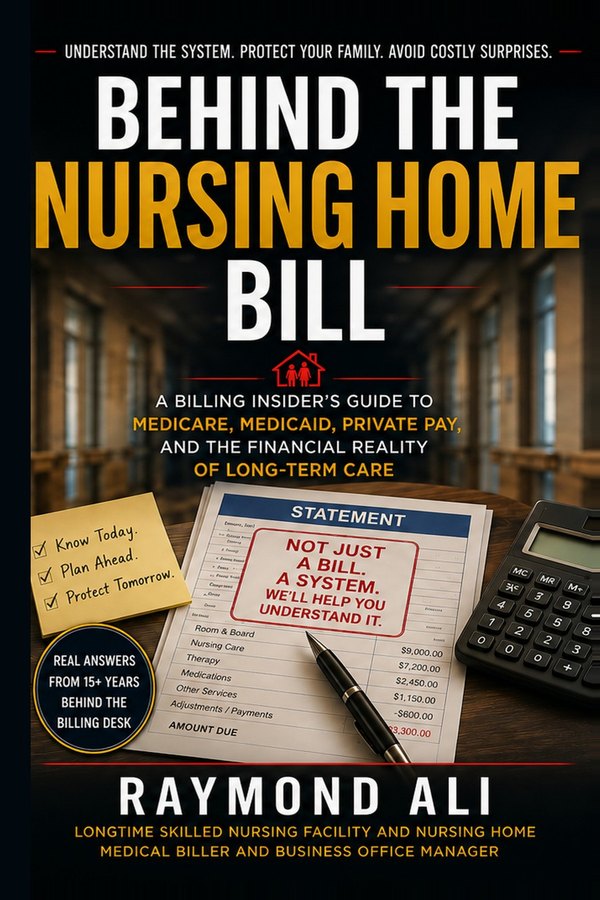
Behind the Nursing Home Bill
A billing insider’s guide to how nursing home billing and long-term care coverage really work, so nothing catches your family off guard.
Buy on Amazon · Buy at Barnes & Noble
Aging Parent Emergency Information Binder
Doctors, medications, insurance details, legal documents, and emergency contacts in one place.
Home Care Agency Hiring & Interview Checklist
Interview questions, reference checks, and service-agreement red flags for comparing agencies.
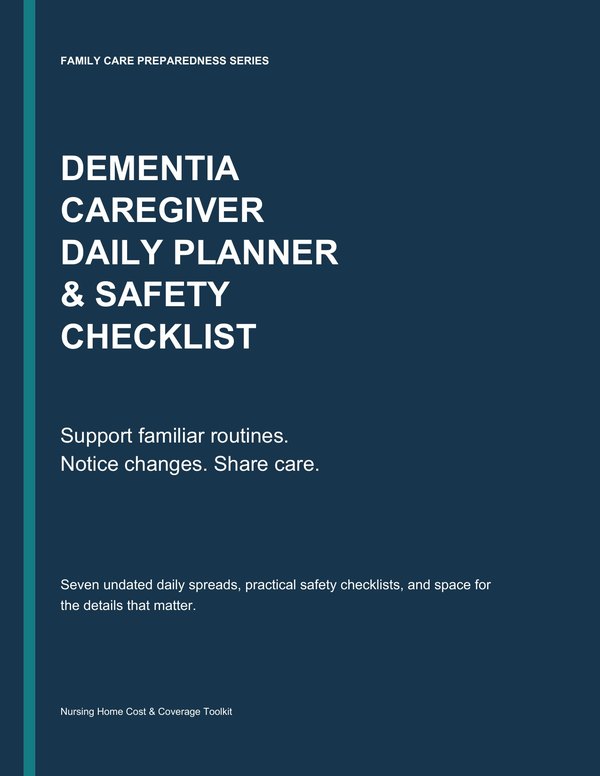
Dementia Caregiver Daily Planner & Safety Checklist
Daily spreads for medications, meals, sleep, and behavior, plus wandering and fall-safety checklists.
Sources
- Medicare.gov: How do I choose a nursing home?
- Medicare.gov: Care Compare
- National Institute on Aging: Long-term care facilities
- Administration for Community Living: Continuing care retirement communities
- Code of Federal Regulations: 42 CFR 482.43, Hospital discharge planning
- Eldercare Locator (Administration for Community Living)
- Administration for Community Living: Long-Term Care Ombudsman Program
This article is for general education only; it is not legal, financial or medical advice. Rules and facility policies can change, so confirm details with the facility and the official sources above.

