Quick answer: A CCRC (continuing care retirement community, also called a life plan community) is a campus that offers independent living, assisted living, and skilled nursing under one contract. Assisted living is a residential setting with help for daily activities like bathing, dressing, and medications. A nursing home provides round-the-clock nursing care and supervision for people with significant medical needs. The right choice depends on the level of care your loved one needs today and is likely to need later.
I’ve spent more than 15 years in the business office of skilled nursing facilities, and families often arrive already confused about what type of place they’re even looking at. The names sound alike, the brochures blur together, and the decision usually has to be made fast. Here’s how the three compare in plain English.
What is a CCRC (life plan community)?
A continuing care retirement community (CCRC) puts several levels of care on one campus: independent living, assisted living, and skilled nursing, often with memory care. Residents typically move in while still independent. If their needs change, they move to a higher level of care without leaving the community. Many now use the name “life plan community.”
How CCRC contracts work: Most CCRCs charge an entrance fee and a monthly fee, and the contract type determines how future care is handled:
- Type A (life care / extensive): Higher levels of care are largely built into the contract, so your monthly fee stays predictable if your needs increase.
- Type B (modified): A set amount of higher-level care is included, and after that, care is billed at a different rate.
- Type C (fee-for-service): You pay for higher levels of care as you need them.
Who it’s for: Healthy, independent seniors who want to plan ahead. Most CCRCs screen applicants on health and finances before move-in, so this is a decision to make early, not during a crisis.
Watch out for: State oversight of CCRCs varies widely, and accreditation through CARF, the only accreditor for CCRCs, is voluntary. Have an attorney review the contract before signing, especially the refund terms and what happens if your needs change.
What is assisted living?
Assisted living is for people who are mostly independent but need help with activities of daily living (ADLs), such as bathing, dressing, eating, and medication management. Residents typically have a private apartment or room, with meals, housekeeping, activities, and staff available around the clock.
- Care level: Personal care and supervision, not ongoing skilled nursing.
- Regulation: Assisted living is generally not regulated by the federal government. Each state sets its own licensing rules, so what a community can and can’t handle differs from place to place.
- Memory care: Many assisted living communities have a separate memory care unit for residents with dementia. Ask exactly what level of dementia care they can provide.
- Key question to ask: “What would cause you to ask my parent to move out?” That answer tells you more than the brochure.
What is a nursing home?
A nursing home, which the industry also calls a skilled nursing facility (SNF) or long-term care facility, serves people who need round-the-clock nursing care and supervision. Some residents are there for short-term rehab after a hospital stay. Others need long-term care because of advanced medical needs or dementia.
- Care level: The highest of the three, with licensed nurses, nurse aides, and therapy services.
- Oversight: Nursing homes that participate in federal programs are inspected and rated. You can review a facility’s health inspection history, staffing, and quality measures for free on Medicare’s Care Compare website before you ever schedule a tour.
- Look beyond the lobby: A beautiful entrance tells you nothing about staffing, inspections, or resident care.
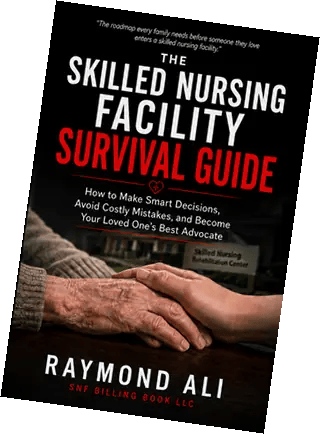
Making this decision right now? The Skilled Nursing Facility Survival Guide walks you through choosing a facility, admission day, and the questions to ask before you sign. Get it on Amazon or Barnes & Noble
Side-by-side comparison
| CCRC | Assisted Living | Nursing Home | |
|---|---|---|---|
| Best for | Independent seniors planning ahead | People who need help with daily activities | People who need round-the-clock nursing care |
| Care levels on site | Independent, assisted living, skilled nursing | Personal care and supervision | Skilled nursing, rehab, long-term care |
| How you move in | Contract with an entrance fee and monthly fee | Residency agreement | Admission agreement |
| Typical resident | Healthy at move-in | Needs help with ADLs | Significant medical or nursing needs |
| Oversight | Varies by state; voluntary CARF accreditation | State licensing | Federal and state inspection |
| Where to check quality | State regulator, CARF, resident reviews | State licensing agency | Medicare Care Compare |
How to choose
- Start with the level of care needed, not the building. Ask your loved one’s doctor or a geriatric care manager what help is needed today and what’s likely in the next few years.
- Ask “what happens when needs change?” This is the biggest unknown in assisted living and a key question for any CCRC contract.
- Track daily changes. If dementia is part of the picture, a daily log of meals, sleep, medications, and behavior helps you and the care team see patterns early. The Dementia Caregiver Daily Planner & Safety Checklist is built for exactly this.
- Check the facts, not the lobby. For nursing homes, review Care Compare before you tour.
- Read the paperwork before signing. That means the CCRC contract, the assisted living residency agreement, or the nursing home admission agreement.
- Get your documents in one place now. Doctors, medications, insurance details, legal documents, and emergency contacts should be easy to find before a crisis. The Aging Parent Emergency Information Binder does exactly that.
Frequently asked questions
Is a CCRC the same as assisted living?
No. A CCRC is a campus that includes several levels of care, often including assisted living and skilled nursing. Assisted living can also be a standalone community.
What’s the main difference between assisted living and a nursing home?
Assisted living provides help with daily activities in a residential setting. A nursing home provides round-the-clock skilled nursing care for people with more significant medical needs.
What does a Type A CCRC contract mean?
It’s a life care contract, where higher levels of care are largely built into the agreement so the monthly fee stays predictable if care needs increase.
Can someone move from assisted living to a nursing home later?
Yes, and it’s common. Ask any assisted living community upfront what conditions would require a move, and how much notice they give.
Do CCRCs accept people who already need care?
Most require applicants to be independent and meet health and financial criteria at move-in. Requirements vary by community.
Where can I check a nursing home’s quality?
Use Medicare’s Care Compare website for health inspection results, staffing, and quality measures.
Prepare before the crisis, with help from Raymond Ali’s books and resources
Nearly every costly mistake I see comes from families learning the rules on the hardest day. These resources are written to help you prepare earlier.
The books
The Skilled Nursing Facility Survival Guide
How to make smart decisions, avoid costly mistakes, and become your loved one’s best advocate, from choosing a facility through admission and discharge.
Buy on Amazon · Buy at Barnes & Noble
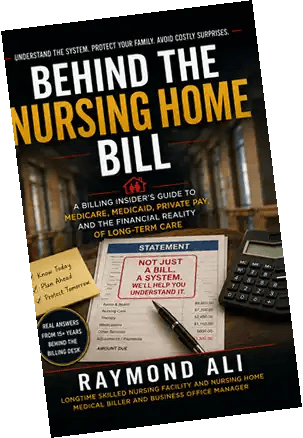
Behind the Nursing Home Bill
A billing insider’s guide to how nursing home billing and long-term care coverage really work, so nothing catches your family off guard.
Buy on Amazon · Buy at Barnes & Noble
Workbooks and checklists
Aging Parent Emergency Information Binder
Doctors, medications, insurance details, legal documents, and emergency contacts in one place.
Home Care Agency Hiring & Interview Checklist
Interview questions, reference checks, and service-agreement red flags for comparing agencies.
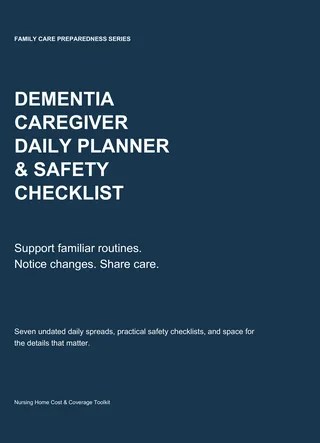
Dementia Caregiver Daily Planner & Safety Checklist
Daily spreads for medications, meals, sleep, and behavior, plus wandering and fall-safety checklists.
This article is for general education, not legal, financial, or medical advice. Services, rules, and requirements vary by state and community. Consult a qualified professional for your situation.


Leave a comment