Signing admission paperwork as the “responsible party” usually means you agree to act as the facility’s contact person and to help manage the resident’s own payments — it does not, by itself, have to mean you are personally guaranteeing the bill from your own money. Federal law prohibits a nursing home from requiring a third-party personal guarantee as a condition of admission. The danger is in the exact wording: some agreements contain voluntary guarantee language mixed into the responsible-party section, so read that section word by word before you sign, and never sign a blank or “we’ll fill it in later” form.
Two different roles that sound the same
Admission packets use similar words for two very different commitments:
- Responsible party / representative: the person the facility calls about care and billing, who helps arrange payment from the resident’s income and assets, provides insurance and Medicaid information, and stays in communication. Signing in this role commits you to help and communicate — not to pay from your own funds.
- Guarantor: a person who personally promises to pay if the resident does not. This is a personal financial obligation, and under federal rules for certified nursing facilities it cannot be required for admission.
The same signature line can sit under language covering both ideas. That is why the heading above the signature matters less than the sentences under it. Look for phrases like “personally liable,” “guarantee payment,” or “agree to pay all charges” — and if you see them, stop and ask.
What to do at the admission desk, step by step
Admission usually happens on a stressful day, with a stack of forms and a parent waiting. These steps protect you without delaying care:
- Ask which signature is required and which is optional. You can say, plainly: “I will sign as responsible party to communicate and help with payment from my parent’s funds. I am not agreeing to be a personal guarantor.” Staff who work admissions hear this regularly.
- Sign with your role noted. If you hold power of attorney, sign in that representative capacity — for example, your name followed by “POA for [parent’s name]” — rather than in your individual name, and make sure the form identifies your parent as the resident responsible for charges from their own resources.
- Strike or question guarantee wording. If a clause makes you personally liable, ask for it to be removed or marked as declined. If the facility will not change it, you can ask to take that page to an elder-law attorney before signing that specific agreement. Do not let urgency turn into a signature you did not understand.
- Never sign blank pages, and get a complete copy of everything you signed, the same day. The copy in your folder is the agreement — not your memory of the conversation.
- Keep your money separate. Pay the facility from your parent’s accounts, not your own, and keep records. Mixing funds creates confusion later, including during a Medicaid application, where your parent’s payment history may need to be shown clearly.
If you already signed and you’re not sure what it says
Do not panic, and do not stop communicating with the facility. Get your copy of the admission agreement (the facility must be able to provide it), read the financial responsibility section carefully, and note exactly which role the wording describes. If charges later come to you personally and you believe you signed only as a representative, respond in writing, attach the relevant page, and ask the business office to correct the billing party. Many of these disputes end at that step, because the paperwork — read closely — often says less than a collections letter implies.
If the amount is large or the facility insists you are a guarantor, an elder-law attorney can review a single agreement in one visit. That is far cheaper than paying a bill that was never yours.
Why facilities ask — and what cooperation actually looks like
From the business office side, the facility’s real need is practical: a reachable family contact, accurate insurance information, help completing a Medicaid application if money runs down, and prompt payment from the resident’s resources. You can be an excellent responsible party — responsive, organized, honest about timelines — without putting your own savings behind the bill. Facilities work with families who draw this line every week.
The admission chapter of The Skilled Nursing Facility Survival Guide walks through the rest of the admission packet form by form, so you know what each signature is actually for before the pen is in your hand.
This is educational information only, not legal or financial advice. Admission agreements and state rules vary, so have an elder-law attorney in your parent’s state review any agreement you are unsure about before — or promptly after — signing.
Get the book
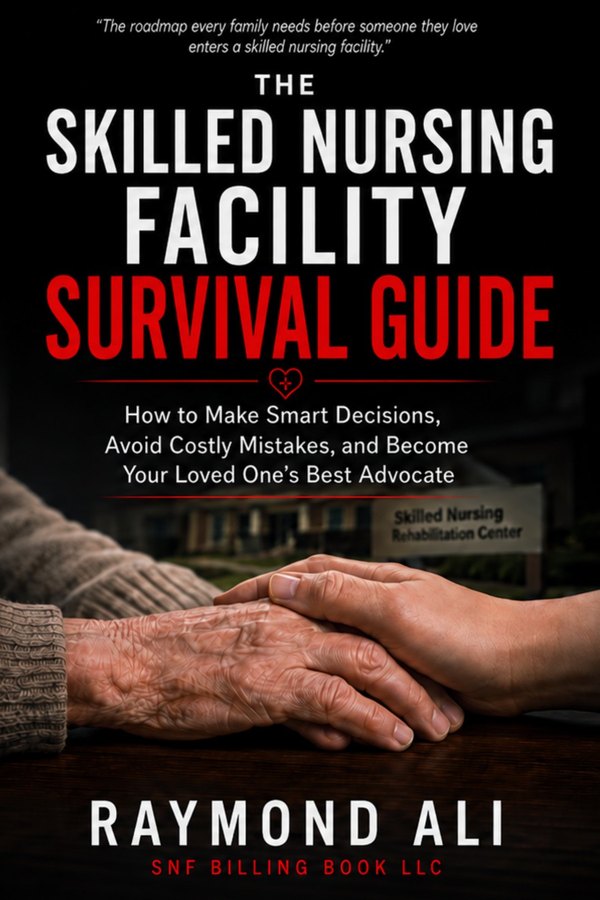
The Skilled Nursing Facility Survival Guide — the plain-English walk-through of admission, Medicare coverage, appeals, and discharge, written from 15+ years inside the SNF business office.
Get it on Amazon: https://www.amazon.com/SKILLED-NURSING-FACILITY-SURVIVAL-GUIDE/dp/B0HFT6VHZ8
Also at Barnes & Noble: https://www.barnesandnoble.com/w/the-skilled-nursing-facility-survival-guide-raymond-ali/1151357034?ean=9798182572545
Frequently asked questions
Can a nursing home require me to guarantee my parent’s bill?
For Medicare- and Medicaid-certified facilities, federal law prohibits requiring a third-party personal guarantee as a condition of admission, treatment, or continued stay. A facility may ask you to sign as responsible party, which is a different role.
What does a responsible party actually have to do?
Typically: serve as the contact person, help ensure the resident’s own funds and insurance are used to pay, share needed financial information, and help with applications such as Medicaid. It is a communication and cooperation role, not a personal promise to pay from your own money — unless separate guarantee wording says otherwise, which is why you read it.
Should I sign as power of attorney instead of in my own name?
If you hold POA, signing in that representative capacity, clearly noted on the form, helps show you acted for your parent rather than personally. Note the capacity right at the signature.
What if I already signed a guarantee by mistake?
Get the agreement, read the exact clause, and raise it with the business office in writing. For significant amounts, have an elder-law attorney review it — enforceability and your options depend on the wording and your state.
Can I refuse to sign anything at all?
You can decline the financial-guarantee role, but refusing all admission paperwork can complicate admission. The practical path is to sign what is required in your representative role, question personal-liability wording specifically, and keep complete copies.


Leave a Reply