Under Original Medicare, the first 20 days of a covered skilled nursing facility stay cost the patient $0 in daily coinsurance. Starting on day 21, that changes: for 2026, the patient owes $217 per day in coinsurance through day 100, and after day 100 Medicare pays nothing for that benefit period. That single change — from $0 to $217 a day — is where many families get their first real shock, because $217 a day adds up to about $6,510 over 30 days.
The three cost stages of a Medicare rehab stay
Medicare Part A covers skilled nursing facility care only when the rules are met: a qualifying inpatient hospital stay, a need for daily skilled care, and care provided in a Medicare-certified facility. When those rules are met, the stay is priced in three stages:
- Days 1–20: $0 daily coinsurance. Medicare pays the approved cost of covered care.
- Days 21–100: $217 per day in 2026. Medicare pays the rest of the covered cost, and the patient — or their supplemental coverage — owes the daily amount.
- Day 101 and after: Medicare pays $0 for that benefit period. The full daily rate becomes private pay, long-term care insurance, or Medicaid if the resident is eligible.
A benefit period is not a calendar year. It begins with a hospital admission and ends after the patient has gone 60 consecutive days without inpatient hospital or skilled nursing care. A new benefit period can start later, with a new hospital deductible and a fresh set of 100 SNF days, if the qualifying rules are met again.
Why day 21 catches families off guard
Families often hear “Medicare covers up to 100 days” at the hospital and understandably hear “Medicare pays for 100 days.” Those are not the same thing. The 100 days are the maximum length of coverage — the payment changes a quarter of the way through.
There is a second surprise: coinsurance is owed even while therapy is going well. It is not a penalty and it is not a sign that coverage is ending. It is simply the cost-sharing stage of the benefit. But at $217 a day, a parent who stays from day 21 to day 60 owes roughly $8,680 in coinsurance before supplemental coverage, so families should know the day count from the first week, not the fourth.
Ask the facility’s business office, in the first few days: “What day is my parent on today, by Medicare’s count?” The facility counts from the SNF admission date, and its count controls the billing.
Who pays the $217 a day?
In practice, the coinsurance is usually paid from one of these sources:
- Medigap (Medicare Supplement) insurance — many plans cover some or all of the SNF coinsurance for days 21–100. Check the specific plan; coverage differs by plan letter.
- Medicaid — if the resident is also Medicaid-eligible, Medicaid may cover the coinsurance.
- Medicare Advantage plans — these do NOT use the $217 figure. Advantage plans set their own SNF copays, often a daily amount after an initial period. Check the plan’s Evidence of Coverage instead.
- The family, out of pocket — if there is no supplemental coverage, the resident owes it directly, and the facility will bill it on the statement.
Do not assume a supplement covers it because it covered hospital costs. Call the insurer in week one and ask the exact question: “Does this plan pay the skilled nursing facility coinsurance for days 21 through 100, and in full?”
How the coinsurance shows up on the bill
The coinsurance normally appears on the facility statement as a patient-responsibility amount for the covered days, while Medicare’s payment appears separately. When you review the statement, check three things: the dates match the actual stay, the day count does not include days after a coverage-ending notice took effect, and no day is billed both as a Medicare coinsurance day and as a full private-pay day. Those overlaps are uncommon, but day-count errors are exactly the kind families can catch by keeping their own calendar.
Keep a simple log: admission date, day 21 date, any hospital transfer dates, and the date of any coverage notice. A transfer back to the hospital can affect the count, and your log is what lets you have a precise conversation with the business office.
Families who want to see how coinsurance, private pay, and the rest of a nursing home statement fit together will find the full billing picture in Behind the Nursing Home Bill, written from inside the business office.
This is educational information only, not financial or medical advice. Coinsurance amounts change each year and Medicare Advantage plans set their own cost-sharing, so confirm your parent’s figures with Medicare, the plan, and the facility’s business office.
Get the book
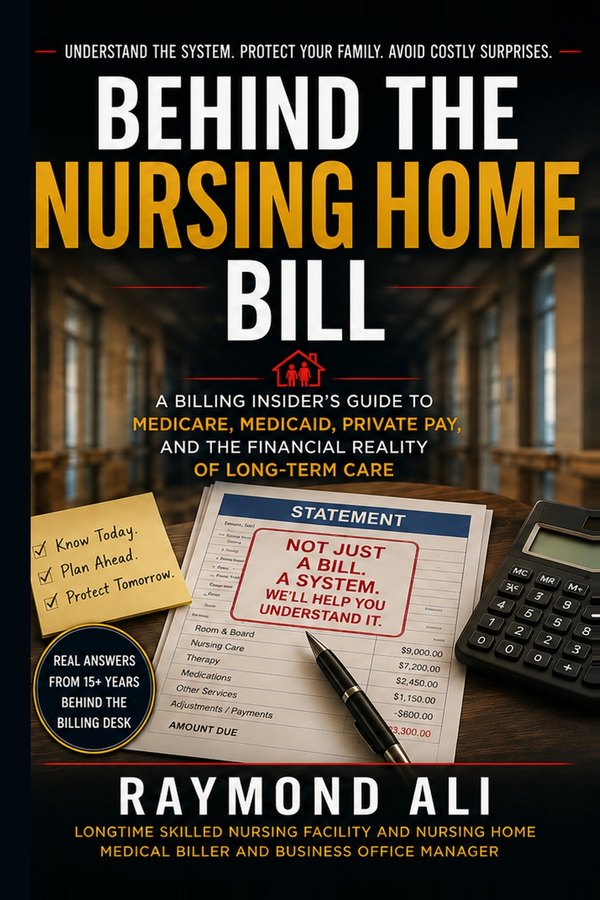
Behind the Nursing Home Bill — a billing insider’s guide to what nursing home care costs, who pays, and how Medicaid really works, in plain English.
Get it on Amazon: https://www.amazon.com/BEHIND-NURSING-HOME-BILL-Financial/dp/B0HFTGLGWK
Also at Barnes & Noble: https://www.barnesandnoble.com/w/behind-the-nursing-home-bill-raymond-ali/1151357022?ean=9798182572576
Frequently asked questions
How much is the Medicare SNF coinsurance in 2026?
$217 per day for days 21 through 100 of a covered skilled nursing facility stay, under Original Medicare. Days 1–20 have $0 coinsurance, and after day 100 Medicare pays nothing for that benefit period.
Does Medigap pay the day 21–100 coinsurance?
Many Medicare Supplement plans do cover some or all of it, but it depends on the specific plan. Call the insurer during the first week of the stay and confirm in plain terms.
Do Medicare Advantage plans charge $217 a day?
No. Medicare Advantage plans set their own SNF copays and rules. Use the copay schedule in your parent’s plan documents, not the Original Medicare figure.
What if my parent leaves for the hospital mid-stay?
A hospital transfer can affect the day count and coverage. Ask the business office how the transfer changed the count, and keep your own dates in a log.
When do we get billed for the coinsurance?
Facilities generally bill patient-responsibility amounts on the regular statement cycle, sometimes after Medicare has paid its share. Ask the business office when to expect the first statement so it does not arrive as a surprise.


Leave a Reply