For a nursing home admission, bring photo ID, Medicare and any other insurance cards, a list of current medications and allergies, advance directives and power of attorney paperwork if they exist, and contact information for family and physicians. Admission moves fast — often the same day as hospital discharge — and the families who arrive with one organized folder finish the paperwork in a fraction of the time and with far fewer follow-up phone calls.
The documents the admissions office will ask for
Gather these first; they are requested at almost every admission:
- Photo ID for your parent (driver’s license or state ID)
- Medicare card, plus Medicare Advantage or supplemental insurance cards if applicable
- Prescription drug plan card, and long-term care insurance policy information if there is a policy
- Social Security number and date of birth (the cards themselves usually stay home)
- Power of attorney, health care proxy/agent paperwork, and guardianship papers if any exist
- Advance directives: living will, health care directive, DNR or POLST/MOLST forms if your parent has completed them
- Contact list: the responsible family member, alternate contact, primary care physician, specialists, pharmacy, and the hospital discharge planner
Bring copies where you can and keep the originals. If a document exists but you cannot find it on admission day, say so — facilities deal with this daily and can note it as “to follow.” What slows things down is not mentioning it at all.
The medical information the care team needs
The hospital sends clinical records, but families fill important gaps:
- A current medication list with dosages — including over-the-counter medicines, vitamins, and supplements
- Allergies, especially to medications, with the reaction noted
- Recent changes: falls, weight loss, confusion, appetite or sleep changes the hospital may not have seen
- Equipment used at home: glasses, hearing aids (with batteries), dentures, walker or cane — labeled with your parent’s name
- Names of home health aides or caregivers who know your parent’s routine
Write this down rather than reciting it from memory. Admission day is stressful, and the written list becomes part of how the care team learns your parent in the first 24 hours.
What to bring — and what to leave at home
Pack a small bag for the first days: comfortable clothes that are easy to put on (labeled with the name), non-slip footwear, basic toiletries, glasses and hearing aids, and one or two small comforts from home, such as a family photo or a familiar blanket.
Leave at home: large amounts of cash, valuable jewelry, and anything irreplaceable. Facilities provide a process for safeguarding small valuables, but the safest place for heirlooms is with family. Ask how personal spending money is handled — many facilities run a small resident trust account through the business office so your parent does not need to keep cash in the room.
Paperwork you will be asked to sign — and how to handle it
Admission involves a stack of documents: the admission agreement, financial responsibility forms, consent forms, and notices about rights, bed-hold policy, and how charges work. You do not have to sign everything at sprint speed. It is reasonable to:
- Ask who is financially responsible under each form before signing it — signing as “responsible party” can mean different things, and you can ask to sign in a representative capacity (for example, as agent under a power of attorney) rather than personally guaranteeing payment.
- Ask for copies of everything you sign, the same day.
- Ask what the daily rate or coverage is for the first days, and when the family will hear if coverage changes.
- Note the name and phone number of the business office contact and the social worker — you will use both.
The first 48 hours: set up the folder that will carry the stay
Start one folder — paper, digital, or both — on admission day with sections for: cards and ID copies, legal documents, admission paperwork you signed, insurance and coverage notices, statements, and a simple log of who you spoke with, when, and what was said. Every later billing question, coverage notice, or care-plan meeting gets easier with that folder behind you.
The admission chapter of The Skilled Nursing Facility Survival Guide walks through these same documents and signatures, including what to ask before you sign as responsible party.
This is educational information only, not legal, financial, or medical advice. Document requirements vary by facility and state, so confirm specifics with the facility’s admissions and business offices.
Get the book
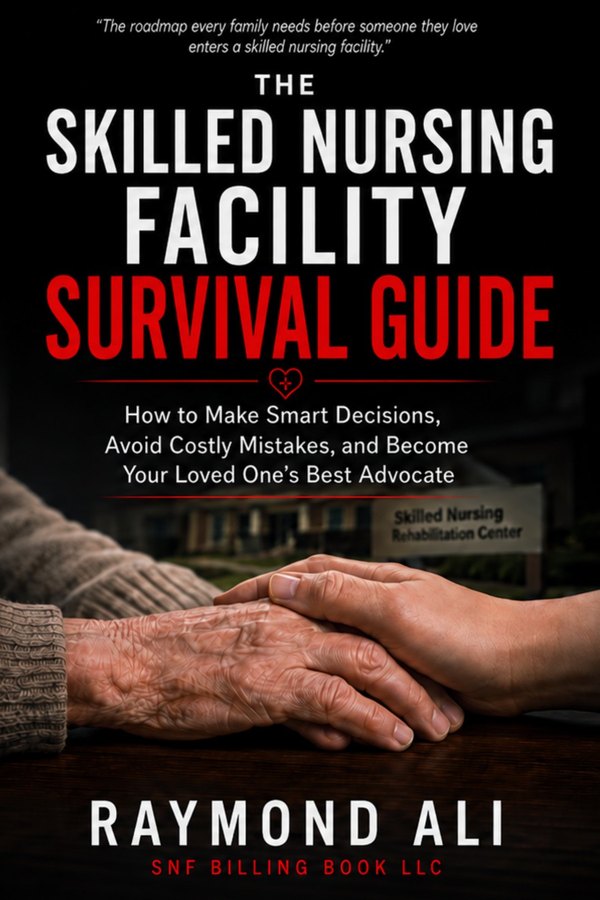
The Skilled Nursing Facility Survival Guide — what to ask, what to sign, and what to watch for from admission through discharge, in plain English.
Get it on Amazon: https://www.amazon.com/SKILLED-NURSING-FACILITY-SURVIVAL-GUIDE/dp/B0HFT6VHZ8
Also at Barnes & Noble: https://www.barnesandnoble.com/w/the-skilled-nursing-facility-survival-guide-raymond-ali/1151357034?ean=9798182572545
Frequently asked questions
Do we need the original Medicare card at admission?
Bring the card or a clear copy so the facility can record the number accurately. Keep track of who has the original and take it home once it has been copied.
What if there is no power of attorney or advance directive?
Tell the admissions team. Many residents are admitted without them; the facility will explain who can make decisions and sign, and an elder-law attorney can advise on next steps.
Should my parent bring their medications from home?
Generally, bring the list, not the bottles, unless the facility asks otherwise. The facility’s pharmacy typically supplies medications during the stay.
How much clothing should we pack?
Start with about a week’s worth of comfortable, labeled clothing. You can adjust once you see the laundry schedule and your parent’s preferences.
Can we get copies of everything we sign?
Yes — ask the same day. A complete set of signed admission documents belongs in your family folder.


Leave a Reply