When a family pays privately for nursing home care, the quoted daily rate usually covers the room, meals, and round-the-clock basic nursing care — but it rarely covers everything. Items such as certain medications, physician visits, therapy beyond what is included, personal supplies, and special services are often billed on top of the daily rate, which is why the first private-pay statement is frequently higher than families expected.
What the daily rate usually includes
Private-pay rates vary widely by state, facility, and level of care, but a standard daily rate typically includes:
- The room — semi-private is the usual base rate; a private room normally costs more per day
- Three meals a day plus snacks, and standard dietary services
- 24-hour nursing supervision and help with activities of daily living (bathing, dressing, eating, mobility)
- Housekeeping, laundry of facility linens, and routine supplies
- Social services, activities, and care-plan meetings
Ask whether the rate is a flat all-inclusive rate or a base rate plus levels of care. Some facilities price in tiers: as a resident needs more help, the monthly cost moves up a tier. A low starting quote can climb, and families deserve to know the tiers before admission, not after.
What commonly costs extra
These are the add-ons that surprise families most often:
- Medications and pharmacy services — prescription drugs are usually billed separately, often through the facility’s pharmacy
- Physician, specialist, dental, eye, and podiatry visits — billed by the provider or added to the statement
- Therapy — physical, occupational, or speech therapy not covered by insurance
- Incontinence and personal supplies — beyond a basic allowance at some facilities
- Transportation — ambulance or medical transport to outside appointments
- Extras — private telephone, cable packages, beauty/barber services, guest meals, and personal laundry
None of these are necessarily improper charges. The problem is only when they were never explained. Ask for the facility’s list of ancillary charges — most facilities have one — and keep it with the admission paperwork.
Questions to ask before the first bill arrives
- “Is this rate all-inclusive, or base-plus-extras? May I have the ancillary price list?”
- “How and when do rates increase, and how much notice will we get?” Annual increases are common.
- “When is payment due, and what happens if a payment is late?”
- “If my parent’s money runs down, how does the facility handle a Medicaid application, and is a Medicaid-certified bed available?”
- “What is refunded if my parent leaves mid-month, transfers to a hospital, or passes away?” Get the refund policy in writing.
That last question matters more than families expect. Facilities differ on whether unused days are refunded, and finding out during a crisis is the worst time.
Reading the first private-pay statement
When the first statement arrives, compare it line by line against the rate you were quoted and the ancillary list you were given. Check the dates of service (admission day and discharge day are billed differently at some facilities), the room type billed, and any charge you do not recognize. Business offices would rather explain a charge in month one than argue about twelve months of the same charge later — ask early, and ask politely in writing so you keep the answer.
Keep every statement. If your parent later applies for Medicaid, the family may need a clear payment history, and if a charge was wrong, the statements are your evidence.
Planning for how long private pay can last
Do the simple math early: monthly rate times the months the family can sustain, compared honestly with your parent’s income and assets. If the money will run down within a year or two, talk with the facility’s business office and an elder-law attorney sooner rather than later, because Medicaid has a five-year lookback on asset transfers and timing mistakes are expensive. Paying privately for a while is common and often unavoidable — doing it without a picture of what comes next is the part to avoid.
If you want a fuller walk-through of how the bill is built — rates, extras, private pay, and Medicaid — Behind the Nursing Home Bill explains the system from the business-office side of the desk.
This is educational information only, not financial or legal advice. Rates, billing practices, and Medicaid rules vary by facility and state, so confirm your parent’s situation with the facility’s business office and qualified professionals.
Get the book
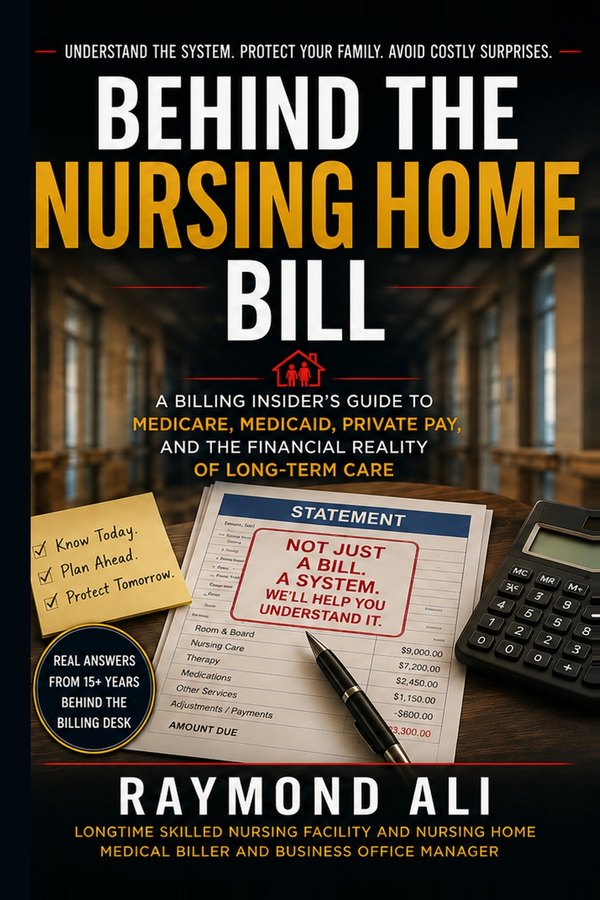
Behind the Nursing Home Bill — a billing insider’s guide to what nursing home care costs, who pays, and how Medicaid really works, in plain English.
Get it on Amazon: https://www.amazon.com/BEHIND-NURSING-HOME-BILL-Financial/dp/B0HFTGLGWK
Also at Barnes & Noble: https://www.barnesandnoble.com/w/behind-the-nursing-home-bill-raymond-ali/1151357022?ean=9798182572576
Frequently asked questions
How much does private pay in a nursing home cost per day?
It varies widely by state and facility — from under $200 to well over $400 a day in many areas. The only figure that matters is the written rate from the facility your parent will actually use, plus its ancillary charges.
Does private pay include medications?
Usually not. Prescription medications and pharmacy services are commonly billed separately from the daily rate. Confirm this at admission.
Can the facility raise the daily rate?
Yes, rates typically increase periodically, often annually. Your admission agreement should say how increases work and how much notice you will receive.
What if the money runs out while my parent is a resident?
Many residents transition to Medicaid once eligible. Ask early whether the facility is Medicaid-certified and how it handles that transition, so there are no surprises later.
Should we pay a charge we do not understand?
Ask for an explanation in writing first. A good business office will walk through any line on the statement — and asking in month one prevents repeat errors.


Leave a Reply