If Medicare stops paying for your parent’s skilled nursing rehab, the facility must give you a written notice — usually called the Notice of Medicare Non-Coverage, or NOMNC — at least two days before coverage ends. That notice is not just information. It starts a very short appeal clock, often with a deadline as early as noon on the day before coverage ends, so the day you receive it is the day to act.
Why coverage ends, even when your parent is not “better”
Medicare’s skilled nursing facility benefit pays for daily skilled care — physical, occupational, or speech therapy, or skilled nursing — while your parent is recovering. It was never designed to pay for long-term custodial care, such as help with bathing, dressing, and eating once no daily skilled need remains.
Coverage commonly ends for one of these reasons:
- Your parent has reached the level of function the care team expects for this stay
- Your parent is no longer making progress that requires daily skilled therapy, or can safely continue with a less intensive program
- Your parent no longer needs daily skilled care, even if they still need a lot of everyday help
- The benefit days for this benefit period have run out (coverage stops after day 100 in any case)
Families often hear “she’s plateaued” and feel the decision is unfair. The important point is not to argue at the nurses’ station — it is to use the formal appeal process, which is fast and free, while you also prepare a safe Plan B.
What the NOMNC should tell you
The written notice should state the date coverage will end, why Medicare will no longer pay, and exactly how to request an expedited appeal through the Quality Improvement Organization (QIO) for your state. The QIO contact information and the deadline should be on the notice itself.
Check the notice as soon as you get it:
- Is the coverage end date at least two days away? If you received it late, say so in your appeal.
- Is the reason specific to your parent, or vague? A specific reason is easier to respond to with records.
- What is the exact appeal deadline and QIO phone/fax? Write both down where you will not lose them.
- Who at the facility can give you the therapy notes and progress records the QIO will want to see?
How the fast appeal works, step by step
Call the QIO listed on the notice before the deadline — do not wait for the facility to do it for you. Explain, in plain terms, what skilled care your parent still needs each day and why going home or dropping to custodial care would not be safe yet. Ask the facility and therapy team to send their documentation promptly; the QIO reviews the records and usually decides within a day or two.
While the appeal is pending, Medicare generally continues to cover the stay until the QIO decides. If the QIO agrees with you, coverage continues. If it agrees with the facility, coverage ends on the date in the notice, and you may be responsible for charges from that date if your parent stays — which is why you should ask, in writing, what the private-pay daily rate would be while you decide.
You can appeal further after a QIO denial, and the notice explains those next steps. Deadlines stay short at every level, so keep every notice in one folder with dates written on the front.
Plan B: preparing in case the appeal does not succeed
Start discharge planning the same day you get the notice, not after the decision:
- Ask what a safe discharge looks like: home with home health, home with family help, or a longer private-pay stay
- Get home-health referrals and equipment (walker, hospital bed, commode) arranged early
- Ask for a written list of medications, follow-up appointments, and warning signs to watch for at home
- If your parent will stay privately, get the daily rate and what it includes in writing before signing anything
A coverage ending feels abrupt because it is. Families who do best are the ones who appeal on time and plan in parallel.
Families who want the appeal timelines, the coverage rules, and the discharge checklist in one place will find them in The Skilled Nursing Facility Survival Guide, written for exactly this moment.
This is educational information only, not medical, legal, or financial advice. Medicare rules and appeal deadlines are specific to each notice, so follow the instructions and dates on the notice you received and confirm details with Medicare or the facility’s business office.
Get the book
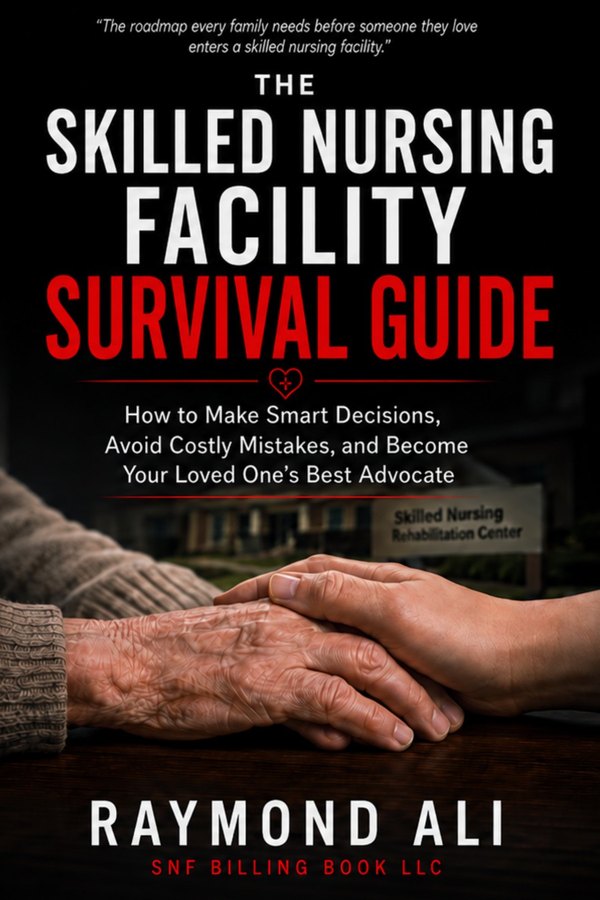
The Skilled Nursing Facility Survival Guide — the plain-English walk-through of admission, Medicare coverage, appeals, and discharge, written from 15+ years inside the SNF business office.
Get it on Amazon: https://www.amazon.com/SKILLED-NURSING-FACILITY-SURVIVAL-GUIDE/dp/B0HFT6VHZ8
Also at Barnes & Noble: https://www.barnesandnoble.com/w/the-skilled-nursing-facility-survival-guide-raymond-ali/1151357034?ean=9798182572545
Frequently asked questions
How much warning will we get before Medicare coverage ends?
Generally at least two days, in writing, through the Notice of Medicare Non-Coverage. If you believe you received it late, tell the QIO when you appeal.
Does “plateaued” automatically mean coverage should end?
Not automatically. The question is whether your parent still needs daily skilled care. If you believe they do, the expedited QIO appeal is how that gets reviewed.
Do we have to pay while the appeal is being decided?
While a timely QIO appeal is pending, coverage generally continues until the QIO decides. Ask the facility’s business office to confirm how your parent’s stay is being billed during the appeal.
What happens after day 100?
Medicare’s SNF benefit for that benefit period is exhausted after day 100 regardless of progress. Any further stay is private pay, long-term care insurance, or Medicaid if eligible.
Can we appeal more than once?
Yes — a QIO denial can be taken to further levels of appeal described in your notices. Each level has its own deadline, so act on each notice the day it arrives.


Leave a Reply